Retail Software
 Distribution Software
 Retail Chain

Top Cloud Accounting Applications in 2026: Why Businesses Are Making the Switch

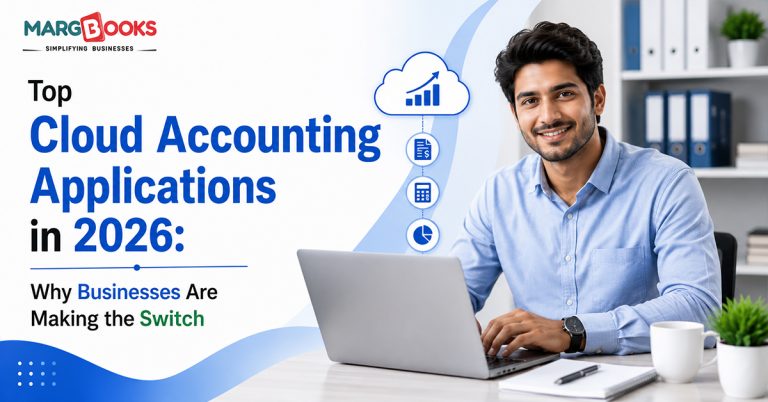
Ask any small business owner what’s eating up their time, and somewhere in the answer you’ll hear “accounts.” Chasing invoices, checking stock, matching bank entries, and filing GST on time, it adds up fast. What makes cloud accounting so attractive to people is the fact that businesses are increasingly transitioning to the platform without them even realizing it.
In this post, you will find valuable information regarding cloud accounting: what it is, why it is worth considering, and who can benefit from it.
What is a Cloud Accounting Application?
A cloud accounting application is accounting software that lives online instead of being stuck on one computer in your office.
With the old desktop-style software, your data sat on a single machine. If that laptop crashed, or you forgot the login on your own system, or you were just out of the office, tough luck. You had no access.
Cloud-based accounting does away with that entirely. Your books sit on secure servers, and you get to them through the internet, phone, laptop, tablet; it doesn’t matter. Nothing to install, nothing tied to one device.
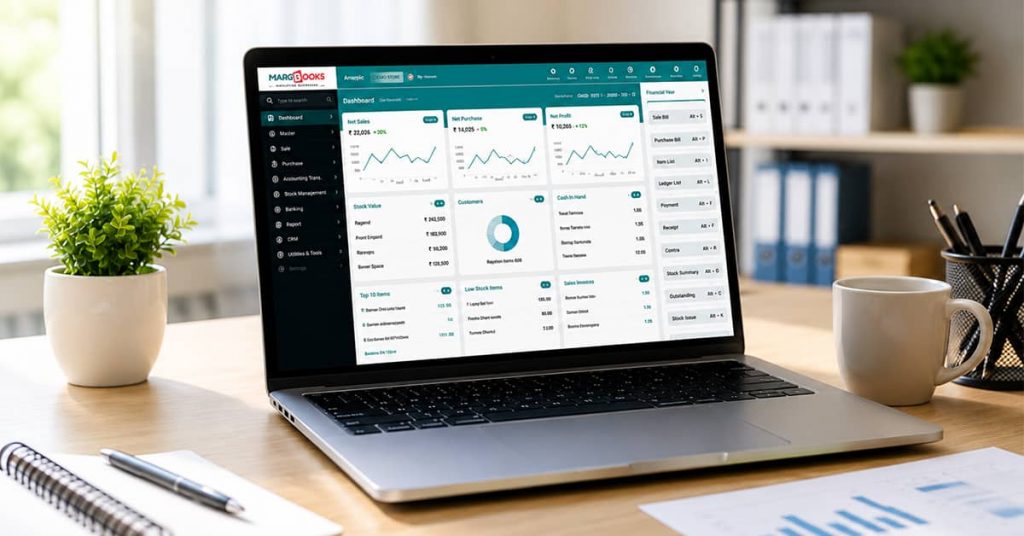
Why is an online Accounting Application important?
A few reasons keep coming up when businesses talk about why they switched:
- Access from anywhere – check your numbers from home, from the shop, from a train if you have to.
- Lower setup cost – no need to buy heavy machines or hire someone just to maintain servers.
- Backups happen on their own – lose your laptop, and your data’s still sitting safe in the cloud.
- You see things as they happen – sales, expenses, profit, all updated in real time, not just at month-end.
- Compliance stays current – GST rules change more often than most of us would like, and cloud accounting tools update themselves instead of leaving you stuck on an old version.
- More than one person can work on it – Your accountant, your staff, and you, all looking at the same live data, at the same time.
None of this is really “nice to have” anymore. For a business that wants to grow past a certain size, it’s more or less the baseline.
Who Should Use Cloud Accounting Applications?
People sometimes assume cloud accounting is only for big companies with fancy finance teams. It’s actually the opposite; it helps smaller setups the most, since they usually don’t have a dedicated finance department to catch mistakes manually.
It tends to work best for:
- Cloud accounting is suitable for both small and medium enterprises that would like to keep their accounting simple without hiring any more personnel.
- It is also an ideal solution for retailers and distributors that need to manage invoicing, inventory, and filing GST all at once.
- Startups are trying to keep costs low while still looking properly organized.
- CAs and accountants handling several clients from a single login.
- Cloud accounting will help coordinate communication between separated teams, so everyone is on the same page.
- If you are still using books, scattered spreadsheets, or desktop accounting software, you should definitely think of introducing cloud accounting to your business.
If you’re still working off notebooks, scattered spreadsheets, or desktop software glued to one PC, this is worth a serious look.
How to Choose/Switch to Cloud Accounting Software
Here is a step-by-step procedure on how to choose the cloud accounting software:-
- Figure out what you actually need first. Invoicing? Inventory? GST returns? Payroll? Pin down your top two or three priorities before comparing tools.
- Compare the shortlist. Look at features, how easy it is to use day-to-day, and whether it’s actually built around your country’s tax rules. GST compliance matters a lot if you’re running a business in India.
- Ask about data security. How are backups handled? What happens if something goes wrong?
- Check the pricing structure. Most cloud accounting applications run on subscriptions, so pick something that fits your business size rather than overpaying for features you’ll never touch.
- Move your existing records over. A decent provider will help with this, so you’re not starting from zero.
- Get your team comfortable with it. Most modern tools are simple enough that this takes a day, not a week.
This is where something like MargBooks tends to make life easier; it’s built specifically with Indian businesses in mind, with GST, billing, and inventory management already baked in, so you’re not stitching three separate tools together just to run your business.
A Quick Real-World Example
Picture a small retail shop. Bills are written by hand, stock is checked manually every evening, and by the time GST filing rolls around, someone’s frantically matching numbers that don’t quite add up.
Now replace that with cloud-based billing software. Every bill created updates the inventory automatically. GST gets calculated on the spot, no manual rate-checking involved. By month-end, the profit and loss numbers are already sitting there, ready to be handed straight to the CA.
That’s really the difference, not just “software,” but hours saved every single week and a lot fewer costly slip-ups.
Conclusion
Cloud accounting software isn’t some passing trend; it’s turning into how businesses of every size handle their money, day to day. Real-time visibility, no heavy IT setup, automatic backups, and a lot less stress around tax compliance.
Whether you’re running a small shop, managing a growing distribution business, or handling books for multiple clients as an accountant, moving to the cloud tends to save time and cut down on avoidable mistakes.
If you’re ready to make the move, take a look at MargBooks. It brings billing, accounting, inventory, and GST filing together under one roof. You can also sign up here and try it out yourself.
FAQs
Q1. Is cloud accounting software actually safe?
In general, they do. Reliable service providers keep data on their secure servers and frequently back it up, which is much better than keeping all data on one device that may fail or disappear.
Q2. Can small companies afford cloud accounting?
Most cloud accounting software requires payment of subscription fees on a monthly or yearly basis, which is likely to be less costly than paying for the program to be stored on one computer plus the device to run it on.
Q3. Does cloud accounting require internet access at all times?
You’ll need internet to sync updates, though some platforms allow a bit of offline work that syncs back up once you’re connected again.
Q4. Which cloud accounting software is best for GST billing in India?
Look for something built around Indian GST rules specifically, with automatic invoicing and return filing built in. MargBooks is designed exactly for that: GST, billing, and inventory, all in one place.
Q5. How long does moving old data over usually take?
Depends on how much you’re carrying over, but most providers help with migration, and it’s usually wrapped up within a few days.

Aman Kannojia is the Digital Team Lead at MargBooks. He started out as an SEO Specialist and never lost his love for words. With 5 years of experience across banking, SaaS, and finance, both domestic and international, he brings strategy, leadership, and storytelling together. He doesn’t just manage a team, he builds one that creates.