Retail Software
 Distribution Software
 Retail Chain

PO Number vs Invoice Number: What’s the Difference?

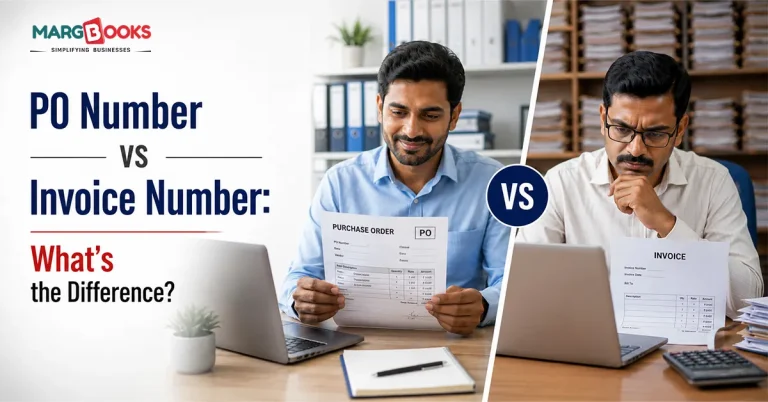
A vendor I know spent almost three weeks chasing a payment last year. Turned out her accountant had typed the invoice number into the PO number box on the form. That’s it. That was the whole problem. But the client’s finance team sat on it until it got fixed, and by then she’d sent two emails and made one call that was, by her own description, “more awkward than it needed to be.”
I bring this up because it happens constantly, and nobody talks about it enough. Folks lump “PO number” and “invoice number” together in their head, two numbers, same drawer, who’s checking. They’re not the same drawer, though. Get them mixed up, and your cash flow quietly stalls while you figure out why. Let’s actually go through it.
What is a PO number?
PO is short for purchase order number. Comes from the buyer’s side, not yours if you’re the one selling. Before goods move or work even starts, the buyer puts together a purchase order, think of it as their formal green light, and that document gets its own number stamped on it.
Something like PO-2026-045. Item, quantity, agreed price, maybe a delivery window. Once that number’s assigned, that’s what everyone refers back to: accounts team, warehouse guys, whoever’s tracking the order.
Nothing about payment here. Just: yes, this purchase is happening, go ahead.
What is Invoice Number?
The other side of the coin. The invoice number is yours, the seller’s, and it doesn’t get created until after delivery has actually happened.
So where the purchase order number opens things, this closes it. It sits on the document that basically says, “here’s what got delivered, now settle up,” just phrased more professionally than that.
Say it reads INV-2026-118. Worth a small tangent here: your invoice number format actually matters more than people assume. Prefix, year, running number, something like INV-2026-118, keeps things sortable and stops accidental duplicates. And duplicates aren’t a small thing. No two invoices from your business should carry the same number, ever, or you’re inviting a GST headache nobody wants.
PO Number Vs Invoice Number
| PO Number | Invoice Number | |
| Who makes it | Buyer | Seller |
| When | Before the deal | After delivery, at billing time |
| What it means | “We’re buying this” | “Pay for what we sent” |
| Multiples? | One PO, several invoices possible | Each invoice is its own thing |
That last row catches people off guard sometimes. Supplier delivers in three batches? One purchase order can generate three separate invoices, no problem there. What is a problem: reusing an invoice number, or a PO number that mysteriously “changes” mid-deal because someone fat-fingered it early on.
Why not just use one number for everything?
Fair question, honestly. If you’re running a retail counter and mostly taking cash, skip all this; nobody’s cutting a purchase order for a bag of rice.
But sell to a bigger company, a government office, or any manufacturer with an actual procurement department, and suddenly the purchase order number stops being optional. Their accounts people won’t touch your payment without it. That’s just how their internal machinery is wired.
Track both properly, and a few things fall into place. The buyer can confirm they’re only paying for what they actually asked for. Invoices clear approval faster, with less back and forth. Fewer arguments that start with “wait, we never ordered that much.” And come audit time, your records read like an actual story instead of a mystery novel someone has to solve.
None of this sounds exciting on paper. It’s the difference, though, between getting paid this week or getting paid two months from now, chasing emails the whole time.
People Genuinely Think These Are the Same Thing
Worth its own little section. Someone filling out an invoice types the invoice number where the PO field should be, or the reverse, because in the moment, both just look like “numbers you fill in a box.”
They’re not the same box. One’s authorization. The other’s a demand for money. Send that mixed-up paperwork to a large client and don’t be shocked when it comes right back, unpaid, with a polite note attached.
Where Do These Numbers Sit on the Document?
Top of the document, usually, near the invoice date and the customer’s name.
Invoice Number: INV-2026-118
Invoice Date: 15 July 2026
PO Number : PO-2026-045
Customer: XYZ Enterprises
The point of putting them there is simple: whoever’s approving payment on the other end should spot it instantly and match it against their own PO paperwork, no digging required. Keep your invoice number format consistent across every bill, as this makes it much simpler to manage for those who check your invoices, as they know where to look for the correct details.
What If the PO Number Is Wrong or Missing?
A handful of outcomes, none great. Invoice bounces back, unpaid. You get asked to redo it with the correct reference. Payment just… sits, frozen, while someone untangles the mismatch on the other end. Or worse, nothing happens at all, your invoice just slides to the bottom of a stack nobody’s rushing through.
Not that buyers are being difficult for the fun of it. Big organizations genuinely can’t process payment without a matching PO in their system; it’s built into how approvals work over there. So just ask upfront, before you even raise the bill: “Got a PO number for this one?” Saves a week of back-and-forth later, easily.
Where software actually earns its place
Trying to track which PO connects to which invoice, across dozens of orders, maybe hundreds once things scale, in a notebook, or worse, some spreadsheet with seventeen tabs? Works fine for a while. Then it doesn’t, and suddenly you’re reconciling numbers at eleven at night, wondering where it all went wrong.
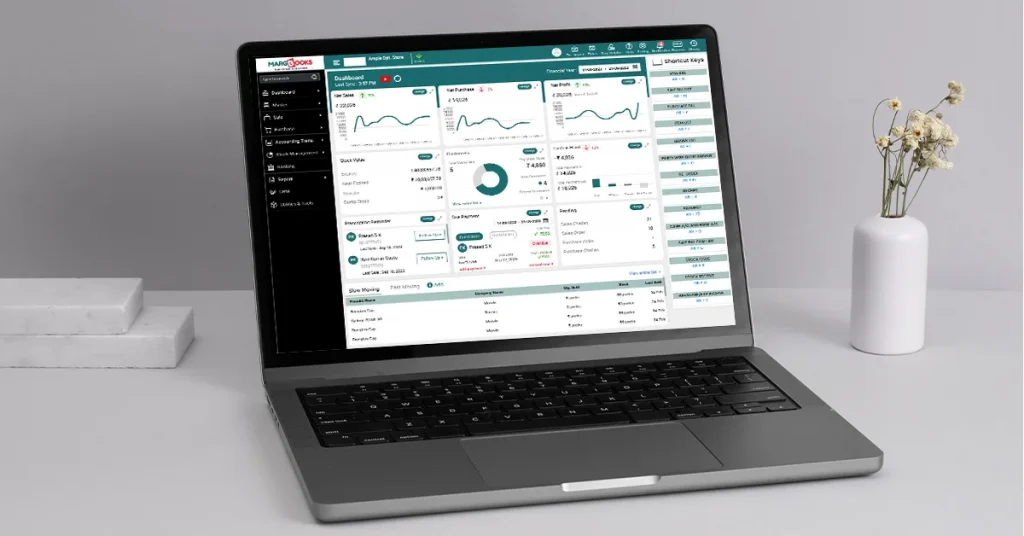
Decent invoicing software solves this without much fuss. Generate the invoice straight off the original PO, quantities, rates, all of it carries over, no retyping. You see instantly what’s pending, what’s billed in full, and what’s slipped into overdue territory. A proper cloud-based billing software takes it one step further, since none of your records are trapped on a single laptop somewhere, you or your accountant can pull up any invoice, any PO, from wherever you happen to be. Sounds small until your business actually grows, and that flexibility stops being a nice-to-have.
If sales orders are part of your workflow too, common enough in manufacturing and wholesale, it’s worth knowing how those differ from invoices as well, since all three documents end up talking to each other eventually. And if a purchase order accounting entry has ever gone sideways on you, wrong ledger, double posting, GST calculated off, most of those slip-ups trace back to this same confusion: what a PO’s job is versus what an invoice’s job is.
Building your invoice format from the ground up? Worth checking a proper walkthrough on where fields like the invoice number should actually sit.
Conclusion
PO number, buyer’s side, comes first; it’s a promise to purchase. Invoice number, seller’s side, comes after; it’s the bill itself. Get careless about the difference, or sloppy matching one to the other, and you’re basically inviting delayed payments and those awkward “hey, what happened to our payment” calls from vendors.
Set up even a basic system to keep the two linked properly, and most of this trouble just stops being a problem. That’s essentially what MargBooks software does: it keeps the PO and invoice tied together on its own, so you’re not manually cross-checking numbers every single time you bill someone. And being a cloud-based billing software, your records travel with you too, instead of staying locked to one desktop in a back office somewhere.
FAQs
Q1. Is a PO number just another name for an invoice number?
No. PO comes from the buyer before any purchase happens; the invoice number comes from the seller afterward, once it’s time to collect payment.
Q2. Can one PO cover more than one invoice?
Yes, this happens all the time with orders being shipped in installments instead of all at once.
Q3. Do I need to get a PO number for every invoice I issue?
No, in reality, small customers seldom require them, but large organizations, including government departments and manufacturers with purchasing departments, are the most likely users.
Q4. What will happen if I mention the wrong PO on the invoice?
The invoice will be rejected, and payment will be held until the discrepancy is resolved.
Q5. Best spot for these numbers on an invoice?
Top of the page, right by the invoice date and customer details, easy to spot, easy to cross-check.

Aman Kannojia is the Digital Team Lead at MargBooks. He started out as an SEO Specialist and never lost his love for words. With 5 years of experience across banking, SaaS, and finance, both domestic and international, he brings strategy, leadership, and storytelling together. He doesn’t just manage a team, he builds one that creates.