Retail Software
 Distribution Software
 Retail Chain

Complete Guide to E Invoice Turnover Limit in India

Ask ten business owners about the e-invoice turnover limit, and you’ll probably get five different answers. Some think it only applies to big companies. Others assume that because their turnover dipped last year, they’re off the hook. Neither is quite right, and getting it wrong isn’t cheap, an invoice without a valid IRN is legally invalid, and that’s a headache nobody wants during a GST audit.
So let’s actually sort this out. Where the limit stands right now, how turnover gets calculated (it’s not as simple as looking at last year’s sales figure), who’s exempt, and what you need in place to stop worrying about it.
E-Invoicing, in Plain Terms
First, a myth worth killing early: e-invoicing does not mean typing your invoice into a government website. You still make the invoice the same way you always have, whether that’s through an ERP, billing software, or for a surprising number of small businesses — Excel.
What’s different is what happens after. The invoice data gets sent to the Invoice Registration Portal, or IRP, which checks it over and sends back an Invoice Reference Number along with a QR code. No IRN, and as far as GST law is concerned, that invoice basically doesn’t count. Your buyer can’t claim credit on it. You’re the one who ends up explaining that to them.
The whole point of the system, really, is to make fake invoicing and duplicate ITC claims a lot harder to pull off, while giving the tax department a live feed of what’s actually happening in B2B trade.
How We Got to a ₹5 Crore Limit
Nobody flipped a switch and made this mandatory for every business overnight. It happened in stages, and honestly, it’s a bit of a rollercoaster looking back:
| When | Turnover Threshold |
| Oct 2020 | ₹500 crore+ |
| Jan 2021 | ₹100 crore+ |
| Apr 2021 | ₹50 crore+ |
| Apr 2022 | ₹20 crore+ |
| Oct 2022 | ₹10 crore+ |
| Aug 2023 | ₹5 crore+ |
Each drop pulled in a fresh wave of businesses that had never dealt with IRPs or JSON schemas before, and each time, there was a scramble to get compliant before the deadline. We’re still sitting at ₹5 crore as things stand.
Where the E Invoice Turnover Limit Stands Right Now
Two numbers matter here, not one. ₹5 crore is the line for mandatory e-invoicing itself; cross it, even once, and B2B invoices, exports, and related documents all need an IRN going forward.
₹10 crore is where things get stricter. Businesses above that also have to get their invoices onto the IRP within 30 days of the invoice date. Miss the window, and the portal just refuses the upload. There’s no grace period, no appeal, it’s rejected, full stop.
There’s chatter about the ₹5 crore number eventually being reduced to ₹2 crore, which would bring a huge number of small businesses into the system for the first time. Nothing’s been notified yet. However, given the pattern of the last five years, I wouldn’t bet against it happening eventually, and it’s smarter to prepare your systems now than to be caught scrambling later.
Calculating Turnover Isn’t as Straightforward as It Sounds
This is genuinely where most confusion comes from.
It’s calculated on your PAN, not your GSTIN. So if you’re registered in three states under one PAN, all three turnovers get added together; you can’t stay “small” in each state and dodge the threshold that way.
Exempt turnover counts too. Even sales that don’t attract GST get folded into the calculation.
And here’s the one that trips people up the most: once you’ve crossed ₹5 crore in any financial year going back to 2017-18, you’re in the system for good. Doesn’t matter if turnover has since fallen to half that. There’s no mechanism to step back out once you’ve stepped in.
So if you had one strong year a while back and have been smaller since, the government still considers you covered.
Which Transactions Actually Need an E-Invoice
Not everything you bill for needs to go through this process. It applies to:
- B2B invoices, where both sides are GST-registered
- Export invoices
- Supplies to SEZ units and developers
- Deemed exports
- Debit and credit notes connected to any of the above
Businesses That Skip This Regardless of Turnover
A few categories sit outside the rule, no matter how large they get:
Banks and other financial institutions, NBFCs, insurance companies, Goods Transport Agencies, passenger transport operators, SEZ units acting as suppliers, and multiplex cinema operators. If you’re in one of these, ₹5 crore doesn’t mean anything to you in this context.
What Counts as an E-Invoice Document
Tax invoices, credit notes, and debit notes fall under this. Delivery challans and bills of supply don’t, so no need to run those through the IRP.
The Actual Process, Step by Step
- You simply create the invoice using your regular billing program.
- The program processes the invoice and prepares the information according to the GST INV-01 format using JSON.
- That JSON goes up to the IRP.
- The IRP checks it and sends back an IRN plus a signed QR code.
- Your software stamps that IRN and QR code onto the invoice before it goes out.
Doing this by hand, invoice by invoice, is not something I’d wish on anyone. Most businesses now lean on e-invoicing software that does the JSON conversion and automatically uploads the second you hit save — no separate portal visit required.
Fields the IRP Actually Checks For
To get validated, an invoice needs the supplier and buyer GSTIN, legal name and address, invoice number and date, HSN or SAC codes per item, quantities, taxable value, applicable tax rates, total invoice value, and place of supply. Slip up on any of these, and you’ll either get an outright rejection or a mismatch that surfaces later during return filing, which is a worse time to discover it.
The Cost of Getting This Wrong
This isn’t a small-fine-and-move-on situation. Under Rule 48(4), an invoice without a valid IRN isn’t just incomplete, it’s invalid. Full stop. That means your buyer loses their Input Tax Credit on it, you’re exposed to penalties, and if you’re above ₹10 crore turnover, any invoice you try to upload past the 30-day mark simply won’t go through.
For businesses doing a lot of B2B trade, that invalid-invoice problem doesn’t stay your problem for long. It becomes your buyer’s problem too, and they’re not going to be thrilled about losing credit because of a compliance gap on your end.
Why So Many Businesses Have Switched to Software for This
Trying to track a turnover threshold that’s moved six times in five years, by hand, while also generating JSON files for every invoice and uploading them one by one — that’s not a workflow, that’s a part-time job nobody signed up for.
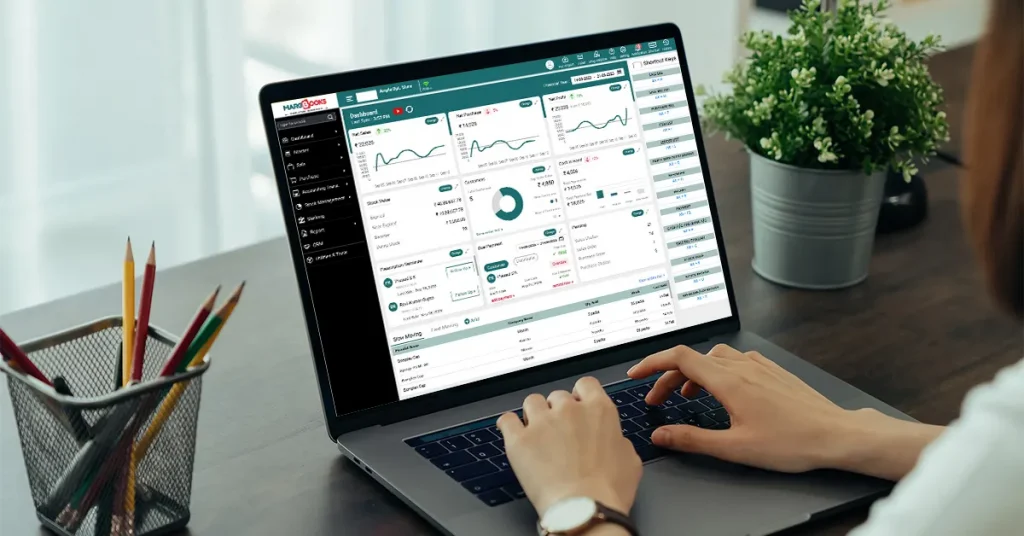
GST billing software handles this quietly in the background. IRN generation happens the moment you save the invoice, no separate step, no forgetting to upload. It also keeps that data flowing into your GSTR-1 and GSTR-3B filings automatically, so you’re not manually cross-checking invoice numbers against your returns every month.
If your operation is bigger than just invoicing, pairing this with proper accounting software or an online invoice software setup keeps your books, invoices, and GST compliance under one roof instead of three tools that don’t talk to each other.
Don’t Mix This Up With E-Way Bills
People conflate these constantly, and they’re not the same thing. An e-invoice validates the invoice for GST purposes. An e-way bill tracks the physical movement of goods from point A to point B. The same transaction might need both, but they’re generated separately and serve completely different purposes.
What Might Change Next
A few things are being floated, none locked in yet: pushing the threshold down to ₹2 crore, shrinking the 30-day reporting window to just 3 days for bigger taxpayers, and tighter linking between e-invoicing, e-way bills, and GSTR-1 so less needs to be manually reconciled.
Nothing here is confirmed. But the trend over the last five years has been pretty consistent — lower thresholds, tighter deadlines, more automation expected. If you’re currently under ₹5 crore, it’s worth having compliant systems ready before you’re forced into it mid-year.
Conclusion
The ₹5 crore threshold isn’t complicated on paper, but it keeps catching people off guard — usually the ones who crossed it once years ago and assumed a quieter year meant they’d dropped out of the system. Treat this as an ongoing part of how you invoice, not a once-a-year compliance check you do right before a deadline.
If chasing thresholds and IRP uploads manually isn’t how you want to spend your time, it’s worth looking at how automated GST billing software handles the whole thing. You can book a free demo and see it in action before deciding either way.
FAQs
What’s the e-invoice turnover limit right now?
₹5 crore aggregate annual turnover, and it’s been that way since August 2023.
My turnover dropped below ₹5 crore, am I still covered?
Yes. Once you’ve crossed it in any year since 2017-18, you’re in the system permanently. There’s no opting out later.
Does this apply to B2C sales?
No, not currently. It’s focused on B2B, exports, and SEZ-related supplies.
What actually happens if I skip e-invoicing when I’m supposed to comply?
The invoice is treated as invalid, your buyer can’t claim ITC on it, and you’re liable for penalties under Rule 48(4).
What’s this 30-day rule I keep hearing about?
If your turnover is ₹10 crore or above, you have 30 days from the invoice date to upload it to the IRP. After that, the portal rejects it outright.
Is turnover calculated per GSTIN or across the whole business?
Across the whole business, it’s PAN-based, so every GSTIN under that PAN gets added together.

Aman Kannojia is the Digital Team Lead at MargBooks. He started out as an SEO Specialist and never lost his love for words. With 5 years of experience across banking, SaaS, and finance, both domestic and international, he brings strategy, leadership, and storytelling together. He doesn’t just manage a team, he builds one that creates.