Retail Software
 Distribution Software
 Retail Chain


12 Best Inventory Planning Software in India (2026)

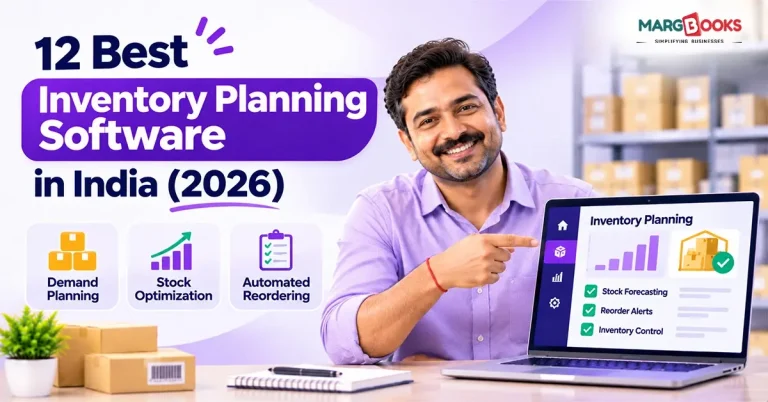
Every business owner who has handled stock knows the two problems that cause the most damage. The first is running out of your fastest-selling item just when customers are asking for it, which means lost sales and customers who may not come back. The second is the opposite: a godown or shelf full of slow-moving stock that ties up cash you need for rent, salaries, and supplier payments. Inventory planning software exists to prevent both. It looks at your past sales, supplier lead times, and expected demand, and then tells you how much of each item to hold and when to reorder, so buying decisions stop depending on memory, gut feeling, or a messy Excel sheet. The challenge in India is that not every tool fits local needs, since GST invoicing, e-way bills, Tally compatibility, and pricing in rupees matter as much as forecasting. This guide compares 12 tools Indian businesses use, from billing-first software like MargBooks and TallyPrime to forecasting specialists like Netstock and Inventory Planner, so you can weigh features, GST support, and pricing side by side and choose the one that suits your business size, industry, and budget.
Detailed comparison table
Prices fluctuate frequently, so examine each vendor’s website before making a decision.
| Tool | Best for | Key feature | Forecasting | GST support |
| MargBooks | Retail and distribution | Billing, stock and reports | Basic | Yes |
| Zoho Inventory | Small online sellers | Multichannel stock sync | Reorder points | Yes |
| Unicommerce | Ecommerce brands | Marketplace and warehouse management | Limited | Yes |
| Odoo | Growing SMEs | Modular ERP | Replenishment rules | Via India localisation |
| SAP Business One | Mid-size companies | Full ERP with planning | Yes (MRP) | Yes |
| TallyPrime | Accounting-led shops | Accounts and inventory | No | Yes |
| Busy | Traders and distributors | Accounts and inventory | Basic | Yes |
| GoFrugal | Retail, pharmacy, restaurants | Industry-specific ERP | Basic | Yes |
| Katana | Small manufacturers | Live manufacturing stock | Yes | Not India-focused |
| Inventory Planner | E-commerce forecasting | Demand forecasts and PO suggestions | Yes | No |
| Netstock | Distributors and wholesalers | Planning layer over your ERP | Yes | No |
| inFlow | Small B2B and wholesale | Barcodes and order management | Reorder points | Limited |
What is inventory planning software?
The main advantage of using inventory planning software is that it helps a business discover how much stock is required and when to reorder new stock. It analyzes the sales history, terms and conditions of the suppliers, and the anticipated demand of the market. Based on that information, it concludes how much you should order for any product so that you have neither overstocks nor stockouts.
Most software programs are equipped with these or similar functions:
- Demand evaluation at the product level
- Reorder level and safety stock
- Alerts about low stocks
- Inventory monitoring across places and locations
- Purchase recommendations
Inventory management software only looks at what you have now. Inventory planning software tells you what you will require next month and advises when to buy the necessary stock.
How we picked these tools
The parameters we evaluated were:
Forecasting: Can it provide insights on stock purchases or just data recording?
Ease of use: Will a team need any training to operate it?
GST and India compliance: Various GST requirements like e-invoicing, e-way bills, and GST reports.
Pricing: Is the pricing accessible for small businesses?
Integrations: Does it offer integration with any accounting application or e-commerce platforms?
Support: Can assistance be obtained in India in local languages?
Scalability: Can it work efficiently if the quantities double in the future?

The 12 best inventory planning software in India
1. MargBooks: Best for retailers and distributors who want billing and stock together
Overview: MargBooks is cloud-based accounting and billing software with inventory management and GST capabilities. It targets businesses that prefer to manage invoices, inventory, and reports in one system rather than using multiple tools.
Key features:
- GST-supported billing
- Item and batch tracking
- Stock alerts and reorder
- Stock and sales reports
- Cloud and mobile access
Pros:
- Billing, accounts, and inventory in one software
- Made according to Indian tax regulations
- Good for non-technical staff
Cons:
- Forecasting is weaker compared to dedicated forecasting software
- Less integration options
Pricing: [Add current price from the MargBooks site]
Best for: Indian retailers, wholesalers, and distributors looking for a dependable inventory management software integrated with GST billing.
2. Zoho Inventory: Best for small online sellers
Overview: Zoho Inventory keeps your stock in sync across your own store, marketplaces, and warehouses. If you already use Zoho Books or Zoho CRM, it fits right in.
Key features:
- Multichannel stock sync
- Reorder points and low-stock alerts
- Purchase and sales orders
- Barcode support
- GST invoicing
Pros:
- Clean, simple interface
- Works well with other Zoho apps
- A free plan or trial may be available (check current terms)
Cons:
- Planning stops at reorder levels
- Some useful features need a higher plan
Pricing: [\on zoho.com/in/inventory]
Best for: Small businesses selling on their own site and on marketplaces.
3. Unicommerce: Best for e-commerce brands on multiple marketplaces
Overview: Unicommerce is built for e-commerce operations. It links marketplace orders to warehouse work such as picking, packing, and shipping.
Key features:
- Marketplace and shipping integrations
- Warehouse management
- Order routing
- Inventory sync across channels
Pros:
- Strong fit for Indian e-commerce workflows
- Copes with high order volumes
Cons:
- Demand forecasting isn’t its main strength
- Likely too much for a single-shop business
Pricing: [Verify with vendor; often quote-based]
Best for: D2C brands and sellers handling several marketplaces and warehouses.
4. Odoo: Best for growing businesses that want a modular system
Overview: Odoo is a modular ERP. You can begin with the Inventory app and add purchasing, manufacturing, and accounting as you grow.
Key features:
- Replenishment rules
- Multi-warehouse stock
- Lot and serial tracking
- Barcode scanning
- Optional Indian localisation for GST
Pros:
- Flexible and easy to expand
- Wide choice of apps
Cons:
- Setup usually needs a partner or technical help
- Costs add up as you add modules
Pricing: [Verify on odoo.com]
Best for: Growing SMEs that want one platform to grow into.
5. SAP Business One: Best for mid-size companies with complex operations
Overview: SAP Business One is a full ERP for small and mid-size companies. It includes material requirements planning (MRP), so it does real planning and isn’t just a stock register.
Key features:
- MRP and planning
- Multi-warehouse inventory
- Financials and purchasing
- Detailed reporting
- GST compliance
Pros:
- Deep planning features
- Mature, well-known product
Cons:
- Higher cost and longer rollout
- Too much for small shops
Pricing: [Verify with an SAP partner]
Best for: Manufacturers and larger distributors with complicated supply chains.
6. TallyPrime: Best for accounting-led businesses
Overview: TallyPrime is probably the accounting tool most Indian accountants already know. Its inventory side covers stock items, units, godowns, and GST reports.
Key features:
- Accounts and inventory together
- GST and e-invoicing
- Godown-wise stock
- Batch tracking
- Large partner network
Pros:
- Familiar to accountants across India
- Fast and dependable on desktop
Cons:
- No real demand forecasting
- Planning is manual or needs add-ons
Pricing: [Verify on tallysolutions.com]
Best for: Businesses where the accountant runs the system and planning needs are simple.
7. Busy: Best for traders and distributors
Overview: Busy is Indian accounting software with solid inventory features, aimed mostly at traders and distributors.
Key features:
- Accounting and inventory in one
- GST returns and e-invoicing
- Batch and expiry handling
- Multi-godown stock
- Reorder level reports
Pros:
- Made for Indian trading businesses
- Good value
Cons:
- The interface feels dated to some users
- Forecasting is basic
Pricing: [Verify on busy.in]
Best for: Small and mid-size traders who want accounting and stock in one desktop tool.
8. GoFrugal: Best for retail, pharmacy and restaurant chains
Overview: GoFrugal sells ERP software tailored to retail, pharmacy, and restaurants, with billing and stock set up around how each trade works.
Key features:
- Retail and pharmacy workflows
- Multi-store stock control
- Purchase suggestions
- GST billing
- Mobile apps
Pros:
- Matches Indian retail formats well
- Handles multiple outlets
Cons:
- Can feel heavy for one small shop
- Price depends on the modules you pick
Pricing: [Verify with vendor]
Best for: Multi-outlet retailers, pharmacies, and restaurants.
9. Katana: Best for small manufacturers
Overview: Katana is a cloud tool that shows live stock, raw materials, and production orders on one screen.
Key features:
- Real-time stock and materials
- Production planning
- Shopify and other store integrations
- Purchase order management
Pros:
- Easy-to-read planning view for makers
- Quick to set up
Cons:
- Not built around Indian GST
- Priced in foreign currency
Pricing: [Verify on katanamrp.com]
Best for: Small product makers who sell online and track raw materials.
10. Inventory Planner: Best for e-commerce demand forecasting
Overview: Inventory Planner does one job: forecasting. It reads your sales history and recommends what to buy and when.
Key features:
- Demand forecasts per item
- Purchase order suggestions
- Stockout and overstock alerts
- E-commerce platform integrations
Pros:
- Forecasting is what it does best
- Useful for seasonal products
Cons:
- No Indian GST billing
- It’s an add-on, not a full system
Pricing: [Verify on inventory-planner.com]
Best for: Online sellers with many items who need better buying decisions.
11. Netstock: Best for distributors and wholesalers who need a planning layer
Overview: Netstock connects to the ERP or accounting system you already use and adds forecasting and buying advice on top.
Key features:
- Demand planning and forecasts
- Slow-moving and obsolete stock reports
- Supplier and lead-time tracking
- ERP integrations
Pros:
- Strong planning insights
- You keep your current system
Cons:
- Needs a compatible ERP
- Not a billing tool
Pricing: [Verify with vendor]
Best for: Wholesalers and distributors who already have an ERP but still plan stock by guesswork.
12. inFlow: Best for small B2B and wholesale teams
Overview: inFlow handles inventory and orders for small businesses that sell to other businesses.
Key features:
- Barcode scanning
- Sales and purchase orders
- Reorder points
- B2B customer portal
- Multi-location stock
Pros:
- Easy to learn
- Good for wholesale order flow
Cons:
- Limited Indian tax support
- Basic forecasting
Pricing: [Verify on inflowinventory.com]
Best for: Small wholesalers who want simple order and stock tracking.
How to choose the right inventory planning software
Start with your size and what you sell.
- Business size: One shop needs something simple. A company with several warehouses needs real planning.
- Number of items: Under a few hundred, reorder alerts may be enough. Above that, forecasting starts to pay off.
- Industry: Pharmacies need batch and expiry tracking, online sellers need marketplace sync, and manufacturers need materials planning.
- Budget: Count setup, training, and add-ons, not only the monthly fee.
- Integrations: Check Tally, marketplaces, and payment tools before you commit.
A few questions to decide:
- Need billing, GST, and stock together? Look at MargBooks, TallyPrime, Busy, or GoFrugal.
- Sell online across channels? Look at Zoho Inventory or Unicommerce.
- Is forecasting your biggest headache? Look at Inventory Planner or Netstock.
- Need a full ERP? Look at Odoo or SAP Business One.
Key features to look for
- Demand forecasting: Estimates what each item will sell.
- Auto reorder points: Warns you before stock runs out.
- Batch and expiry tracking: A must for pharma and food.
- Barcode scanning: Cuts counting and entry mistakes.
- Multi-warehouse stock: One view of every location.
- GST-ready invoicing: E-invoice and e-way bill support.
- Reports and KPIs: Stock turnover, stockout rate,e and slow-moving items.
Inventory planning vs inventory management: what’s the difference?
Inventory management tracks the stock you have right now. Inventory planning works out what you’ll need and when to buy it. One looks at today; the other looks ahead.
| Inventory management | Inventory planning | |
| Focus | Current stock | Future demand |
| Main question | What do I have? | What should I buy? |
| Typical output | Stock records, counts | Forecasts, reorder quantities |
| Example task | Recording a sale | Setting safety stock |
Common inventory planning mistakes to avoid
In this section, we are dis
- Running everything on Excel. Sheets fall apart once items, locations, and staff grow.
- Ignoring supplier lead times. A reorder point means nothing if it forgets how long delivery takes.
- Keeping no safety stock. One late shipment and you lose sales.
- Never checking slow movers. Dead stock quietly eats your cash.
- Forecasting by gut feeling alone. Use at least a few months of sales data.
- Skipping stock counts. System numbers slowly drift away from what’s on the shelf.
Conclusion
The correct inventory planning program is the one that fits the operations of your business. For example, a simple shop might just need a billing program that covers stock and GST. A growing distributor or e-commerce business would require good forecasting, while a larger organization might need a full-blown ERP. In every case, however, the ultimate objective is the same: having the right stock, saving cash, and avoiding guesswork.
Before making a choice, compare two or three options and test them against your actual inventory list for a week or two. Determine how easily your staff can manage the program, whether GST invoices and e-way bills work properly, and how clear the system is in terms of ordering. If you require billing, GST, and stock management in one software, you may consider tools like MargBooks Software. An ideal program should save you time instead of making your job more difficult.
FAQs
1. What is the best inventory planning software in India?
There is no clear winning solution. Zoho Inventory is suitable for small sellers, Unicommerce is perfect for companies on a marketplace, Odoo and SAP Business One suit large companies well, whereas MargBooks provides accounting solutions along with stock control for retailers looking for GST-compliant billing. Choose based on the size, industry, and budget of the company. What is necessary is to start with something basic that is ready for GST purposes.
2. Which inventory planning software is best for small businesses?
MargBooks, Zoho Inventory, TallyPrime, and Busy are popular solutions. Do not think about using a complete ERP solution such as SAP Business One until you deal with complicated purchasing or have a network of warehouses, as it does not pay off due to too many expenses and the duration of implementation.
3. Is there free inventory planning software in India?
Some companies provide free packages or trials with limitations applied. In the past, Zoho Inventory made a limited free plan available. Companies update terms often, so you need to check pricing pages regularly.
4. What is the difference between inventory planning and inventory management software?
Software for management keeps track of inventory in motion. Software designed for planning projects requests for supplies and suggests orders. Several systems take care of both functions, but true planning systems such as Inventory Planner and Netstock do much more regarding forecasting.
5. Can inventory software handle GST billing?
Yes, if it was designed for India. MargBooks, TallyPrime, Busy, GoFrugal, and Zoho Inventory have all been equipped to handle GST, but only some have the features to handle e-invoicing and e-way bills. Globally available tools like Katana and Inventory Planner, however, are usually not configured to do so.
6. How much does inventory planning software cost in India?
The price depends on the particular business being done. For example, billing-based tools can range from a few thousand rupees yearly to lakhs of rupees for an ERP. Setting up forecasting software comes with its own monthly charges. You should also consider integration, training, and installation costs, and check with the vendor for current pricing.
7. Is Excel enough for inventory planning?
Excel works for small inventories maintained by a person in one location but cannot deal with live inventory, different users, and forecasting. Once you notice mistakes, low stock, or undelivered products, you must upgrade.
8. Which software is best for demand forecasting?
Inventory Planner and Netstock have the best forecasting capabilities, while SAP Business One uses MRP for planning. Solutions from the billing realm like MargBooks, TallyPrime, and Busy notify you about reorders but deliver only basic forecasting. If forecasting is critical for you, you should supplement the billing system with a planner.

Aman Kannojia is the Digital Team Lead at MargBooks. He started out as an SEO Specialist and never lost his love for words. With 5 years of experience across banking, SaaS, and finance, both domestic and international, he brings strategy, leadership, and storytelling together. He doesn’t just manage a team, he builds one that creates.