Retail Software
 Distribution Software
 Retail Chain


Invoice Date vs Due Date: What’s the Difference?

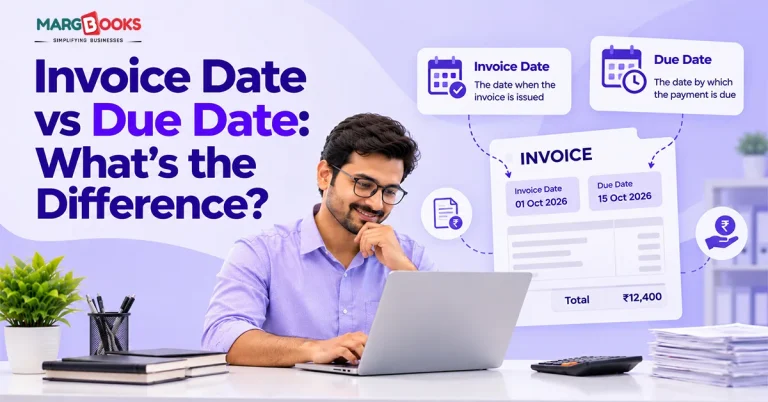
People mistakenly believe that the invoice date and the due date are the same thing, which can cause them to lose money. A customer looks at one date and thinks that he should meet his obligation to pay on that date, while the creditor sees some other date and thinks that the payment is overdue. Nobody is being dishonest, and the money is still not paid on time. The solution is very easy once one learns what purpose each date serves; the invoice date is simply the date of issuance for the invoice, whereas the due date is the date when the money must be with the creditor. This article explains how each date functions, how the payment terms connect both, and how to determine them right to get the money you expect to get and the time you expect it to arrive.
What Is an Invoice Date?
The invoice date is the day mentioned on the invoice, which is supposed to be the actual date of issuance. It is also the starting point for almost all the dates in the invoice. Invoice date matters. There are three important consequences of this single date. First is the accounting period. A billing dated March 31 indicates revenue for March, while one dated April 1 has revenue for that month. This means that one single day can enable a company to move its revenue from period to period. Second is taxation. Under the accrual basis of accounting, the invoice date signifies when the transaction took place. Rules differ by region or country. Please make sure to clarify this with your accountant. Third is payment timing. For a payment term like Net 30, such conditions will create 30 days from the invoice date, rather than from the day when an email was opened.
Is the invoice date the same as the delivery or service date?
That is not the case; for example, if you finish your project on the 20th and send out your invoice with a date of the 24th, then your service date will be the 20th, and your invoice date will be the 24th. Most invoices also show both dates, helping the customer associate the bill with the work. If you are working continuously, it is better to mention something like “from 1 to 31 March.”
Can you backdate or postdate an invoice?
While it is possible to backdate invoices, it is typically not advisable. Engaging in the practice of backdating can lead to difficulties during an audit, inaccuracies in your books, and confusion if the customer’s records do not match your own. Postdating invoices, on the other hand, is less risky but does require justification.

What Is a Due Date on an Invoice?
The due date refers to a specific day when payment is expected to happen. This means that the phrase “make a payment” gets turned into a directive with an exact day when payment should take place.
How due dates are determined
Usually, the due date follows from one of three areas: particular payment terms from a contract, particular terms that are generally considered acceptable for any customers, or standards that exist within a certain industry. For instance, the construction industry, retail activity, and consulting activity have different standards.
It does not matter which method is chosen to come up with the due date for a particular invoice. What is important is to list the date on the invoice because if it is not made clear, there will be a lot of people who will have trouble figuring out the due date.
Why due dates matter for cash flow
The bills need to be settled. Payroll, rent, and supplies all come with time constraints. The due date lets you organize your payments properly. When a payment is late, the delay worsens the situation, especially for small businesses with poor cash flow.
What happens when the due date passes
Once an invoice is overdue, the usual sequence goes like this:
- A polite reminder, ideally sent a few days before and again on the due date
- A firmer follow-up if there’s no response
- A late fee or interest charge, if your terms include one
- Escalation, which might mean a call, a formal demand letter, or collections
Tools or invoice management software with automatic payment reminders handle the first two steps without you having to write an awkward email. Late fees and overdue tracking help using the same invoice software with the rest. Before adding a penalty, read up on late payment fees, because they’re only enforceable if the customer agreed to them upfront.
Invoice Date vs Due Date
The date on the invoice is the date when it was produced and sent out. This date signifies the creation of the invoice and will usually start the countdown for payments.
The deadline is the date when the payment needs to be made before it becomes overdue. After the deadline has passed, the invoice becomes outdated, and penalties for late payment can begin to apply.
| Invoice date | Due date | |
| Definition | The day the invoice is issued | The deadline for payment |
| Who sets it | The seller, on the day of issue | The seller, based on agreed payment terms |
| What it affects | Accounting period, tax reporting, start of the payment window | When the invoice counts as late |
| Example | March 1 | March 31 |
How Payment Terms Connect the Two Dates
Payment terms explain when the customer is expected to pay. Common examples include:
- Due on receipt: Payment is expected when the customer receives the invoice. The exact meaning may depend on the agreement.
- Net 7: Payment is due within seven days, according to the agreed counting method.
- Net 15: Payment is due within 15 days, according to the agreed counting method.
- Net 30: Payment is due within 30 days, according to the agreed counting method.
- Net 60: Payment is due within 60 days, according to the agreed counting method.
- EOM (end of month): Often means payment is due at the end of the month, but the precise meaning can vary. State the intended deadline clearly in the agreement or on the invoice.
Worked example: Invoice date 1 March + Net 30
Suppose you issue an invoice on 1 March with Net 30 terms, and the agreement counts 30 calendar days after the invoice date, treating 2 March as day one. Under that convention, the due date is 31 March.
If the same invoice were issued on 15 March, the due date under the same counting convention would be 14 April. The payment terms have not changed; the invoice date has.
Always confirm how the contract counts days and whether weekends or public holidays affect the deadline. Do not assume a deadline automatically moves to the next business day unless the agreement or applicable law says so.
Common calculation mistakes
- Counting from the wrong date. If the payment conditions say Net 30 from the invoice date, wait until the invoice has been sent before making the calculations.
- Ignoring month differences. If the invoice was created on January 31, counting the thirty days will mean it will be due on March 1 of a leap year.
- Misinterpreting EOM. An invoice issued on the 28th will be due in a couple of days due to the EOM prompt.
- Neglecting weekends and holidays. If the last day for payment falls on a Sunday, the customer may pay on Monday or the Friday before. Be clear on your expectations regarding the date.
Invoice Date vs Due Date vs Service Date
It’s easy to confuse the three terms; therefore, let’s take time to explain the differences between them. The service date indicates when the services are provided or the goods delivered. The invoice date reflects the day on which you charge for your goods or services. Lastly, the due date indicates the day on which you expect to be paid.
In an ideal world, these three terms should happen one after another, leaving an appropriate amount of time between them. However, usually, the service date happens much earlier than the invoice date; for instance, you may find yourself waiting too long to receive payments.
Key Differences at a Glance
- Purpose: The bill date determines the date of service. The due date determines when payment needs to be made.
- Timing: The bill date comes first. The due date always occurs after the bill date.
- Accounting effects: The bill date determines the timing of revenue recognition. The due date affects cash flow management and late payments.
- How it works: The bill date is based on when the bill is sent to the customer. The due date is calculated based on your payment terms with the customer.
- Flexibility: The bill date has to reflect reality. The due date can be negotiated before starting the work.
- Consequences of incorrect date: The wrong bill date affects bookkeeping; the wrong or missing due date affects payments.
How to Set Invoice and Due Dates Correctly
- Do not delay the submission of the invoice- the longer you wait to get the invoice submitted, the longer it takes for you to get your money.
- Be sure to discuss the terms before they start the work; make it part of the contract or proposal and keep it out of the email forms of communication for the sake of timeliness.
- Indicate the exact date that the invoice is due- “Net 30” doesn’t hurt to have, but saying “Due: 31 March 2026” makes it obvious to the customer when the money gets to you.
- Stay consistent with the format for showing the due date- 04/05/26 can be understood differently in different parts of the world, while showing simply the month makes the understanding easier for everyone involved.
- Use a good template for an invoice created by a free invoice generator to make sure there is a place for the date there.
- Ensure you use an effective numbering model for your invoices to make it easy to maintain control over them.
Common Mistakes to Avoid
Here are a few common mistakes to avoid-
- Leaving the due date off – Without it, it’s up to the customer to decide when to pay, and it’s unlikely they’ll pay early.
- Using vague phrases – “Payable soon” or “Pay when it’s convenient to you” means nothing in the event of a dispute.
- Using wrong date formats – Mixed formats create a lot of misunderstanding, especially with international customers.
- Sending invoices too late – Combining invoices at the end of the month makes payment on each invoice take much longer.
- Setting the due date prior to the date of the invoice – It sounds absurd, but it happens in case of manual entry.
- Changing terms without notifying the customer – When you change your payment terms from net 30 to net 15, make sure to notify the customer ahead of the next invoice instead of attaching such information in the invoice.
How Invoicing Software Handles Dates Automatically
Doing this by hand works when you send two invoices a month. At twenty, it gets error-prone. Online invoicing software calculates the due date from your terms the moment you set the invoice date, so there’s no counting days on a calendar.
It also takes care of the follow-up. Reminders go out before and after the due date, overdue invoices are flagged in one view, andrecurring invoices are created and sent on schedule for retainer clients. Addonline payments, and customers can pay straight from the invoice, which tends to shrink the gap between the due date and the payment date.
Larger teams that manage hundreds of invoices can go further with accounts receivable automation, which ties invoicing, reminders, and reconciliation together.
Conclusion
The date stated on the bill indicates when the service was provided, and the due date indicates when payment is expected. The payment terms link these two dates. It is important to ensure all three are correct to minimize payment delays. Sending invoices on time, printing the correct due date, and agreeing on payment terms before work begins is the right course. Tools such as Margbooks help in reminding and calculating payment dates so that invoices can be sent out with correct dates.
FAQs
Q1. Is the invoice date identical to the due date?
No. Invoice date refers to the date the invoice is issued, and due date refers to the date of payment. They are the same if there are terms, “due on receipt”.
Q2. What date applies to accounting and taxation?
In general, the invoice date is used most of the time with accrual accounting. If it is cash-basis accounting, it is when the cash is received. However, it varies in different countries.
Q3. Is a due date the same as the invoice date?
Absolutely. In fact, this is what is meant by the “due on receipt” term. In general, this means that the customer is expected to pay the invoice as soon as it has been received.
Q4. What’s the difference between due date and payment date?
The due date is the last day for payment. The payment date is when the money actually goes into the account. If the payment date goes beyond the due date, the invoice will be considered overdue.
Q5. Can I change the due date?
Yes, you can do this, but you will need to get the customer’s approval.
Q6. What is meant by Net 30?
Net 30 generally means payment is due within 30 days, but the agreement should make clear when the period starts and how days are counted. For example, if an invoice is dated 1 March and the terms count 30 calendar days after that date with 2 March as day one, the due date is 31 March. Different wording or local rules may lead to a different result.

Aman Kannojia is the Digital Team Lead at MargBooks. He started out as an SEO Specialist and never lost his love for words. With 5 years of experience across banking, SaaS, and finance, both domestic and international, he brings strategy, leadership, and storytelling together. He doesn’t just manage a team, he builds one that creates.