Retail Software
 Distribution Software
 Retail Chain

What is Process Improvement? Meaning, Benefits & Strategies Explained

Every shop owner has had this day: a bill gets typed twice, the stock count doesn’t match what’s actually on the shelf, and someone’s filing a GST return an hour before the deadline because nobody caught the mismatch until it was too late. That’s not bad luck. Nine times out of ten, it’s a broken process, and broken processes can be fixed.
We’ve spent years at MargBooks working alongside retailers, distributors, and small accounting teams across India. One pattern keeps showing up in the businesses that actually grow: at some point, they stopped shrugging off the small inefficiencies and started fixing them, one at a time. That’s process improvement in plain terms, not a management buzzword, just the habit of asking “why does this take so long” and actually doing something about the answer.
What is Process Improvement?
Process improvement is about analyzing how a process is carried out now, figuring out what is causing delays, wasting money, and errors, and making the necessary changes to the process. It is not a one-time fix you can easily forget about. It’s closer to a habit; you keep an eye on how invoices get created, how stock gets counted, how GST returns get filed, and you stay open to a faster or cleaner way of doing each one.
That’s a different exercise from process re-engineering, where a business tears a workflow apart and rebuilds it from scratch. Process improvement is quieter than that. Smaller changes, tested more often, instead of one giant overhaul.
Take a shop that used to write bills by hand, update a paper stock register separately, then sit down at month-end to work out GST. Switch that same shop to cloud-based billing software where a single sale updates inventory and tax records automatically, and you’ve just done process improvement at its most basic, same outcome, a completed sale, but the number of steps to get there drops from ten down to two.
Why is Process Improvement Important?
Here’s the honest answer: most businesses are quietly bleeding money to their own processes and don’t realize it. The fact that a billing employee has to input the same client information for the fifth time in one day does not signify a lack of knowledge on their part; rather, it indicates that the procedure has caused the repetition. If you perform such calculations for a month, you’ll see that it adds up to hours that are absolutely wasted and leads to mistakes associated with fatigue.
A few places this shows up most, for small and medium businesses in India specifically:
- Fewer GST filing errors. Most mismatches between books and GST returns trace back to manual entry across separate sales, purchase, and stock registers, three places doing what should be one job.
- Faster billing at peak hours. Try running 200 bills manually on a festival weekend. It doesn’t work, and everyone in line knows it.
- Real cash flow visibility. When sales, payments, and stock updates happen the moment they occur instead of getting reconciled weeks later, you know where your business actually stands today.
- Less dependence on one person. If only one employee understands how the billing register really works, that’s a risk sitting quietly in the corner. A simpler, better-documented business process improvement removes that risk.
Our breakdown on GST invoice software and billing accuracy goes into where most GST billing process automation errors actually originate, if you want to dig into that specifically.
Who Should Use Process Improvement Strategies?
This isn’t reserved for large companies with an operations department. From what we’ve seen working with thousands of SMEs, the businesses that get the most out of process improvement strategies usually fall into a few buckets:
- Retailers are trying to juggle billing, stock, and a line of walk-in customers, all at the same time
- Distributors and wholesalers managing multiple parties, credit cycles, and bulk orders that don’t fit neatly into one invoice
- Retail chain owners who need the numbers to stay consistent across three, four, or ten outlets
- In-house accountants were stuck reconciling three separate registers the night before a GST deadline
If any of that sounds like your Tuesday, you’re exactly who this applies to. Our billing software built for retailers and distributors was shaped almost entirely by feedback from businesses in these exact categories, not built in a vacuum, and we hoped for the best.
How to Implement Process Improvement (Step-by-Step)
Step 1 — Determine what people actually do in practice instead of imagining things in your head.
Write down the real steps a sale goes through, start to finish, from “customer picks item” to “invoice filed for GST.” Most owners are genuinely surprised by how many manual handoffs are buried in there once they see it on paper.
Step 2 — Find where it’s actually breaking.
Usually, it’s one of three things: re-entry (typing the same data twice into two systems), waiting (someone has to manually go check the stock), or delay (GST entries get batched up instead of being recorded as they happen).
Step 3 — Automate the biggest time sink first.
Don’t try to fix everything in one week. Start with whichever task eats the most hours — for most businesses, that’s billing and invoicing. Our online invoicing software exists specifically to cut out that re-entry step between sales, stock, and tax records, which is usually where invoicing process automation pays off fastest.
Step 4 — Let inventory and accounts sync on their own.
When one sale updates both the stock count and the ledger at the same time, an entire category of month-end reconciliation just stops happening. Our guide on inventory management within billing software covers this inventory management process in more detail.
Step 5 — Check in monthly, not once a year.
This isn’t a project with a finish line. Look at your reports every month, notice where errors are still showing up or time is still being wasted, and adjust again. That’s really what a continuous improvement process means, in practice rather than in theory.
Common Process Improvement Techniques
A handful of frameworks are worth knowing, even if you never run one formally:
- Lean, which came out of Toyota’s manufacturing floor, is built around cutting anything in a process that doesn’t add real value to the result.
- Six Sigma, developed at Motorola, focuses on reducing errors and inconsistencies until a process is reliably accurate every time.
- Kaizen, a Japanese term that roughly means continuous, ongoing improvement, works through small, regular changes rather than one big overhaul and honestly, this is the one closest to how most small businesses actually improve, whether they know the name for it or not.
You don’t need to launch a formal Six Sigma initiative to get value from process improvement techniques like these. Most SMEs we’ve worked with make more progress through small, steady changes than through one dramatic overhaul, which is the same logic behind keeping accounting and inventory built into one connected system that is accounting software instead of juggling three separate tools that don’t talk to each other.
A Real-World Example
Picture a mid-sized general store running two counters and pushing through 150 to 200 bills a day. Before making any changes, billing was manual, stock was counted and updated by hand once a day, and GST filing meant one staff member losing the better part of two full days each month just cross-checking sales against stock movement. Not fun for anyone involved, least of all that staff member.
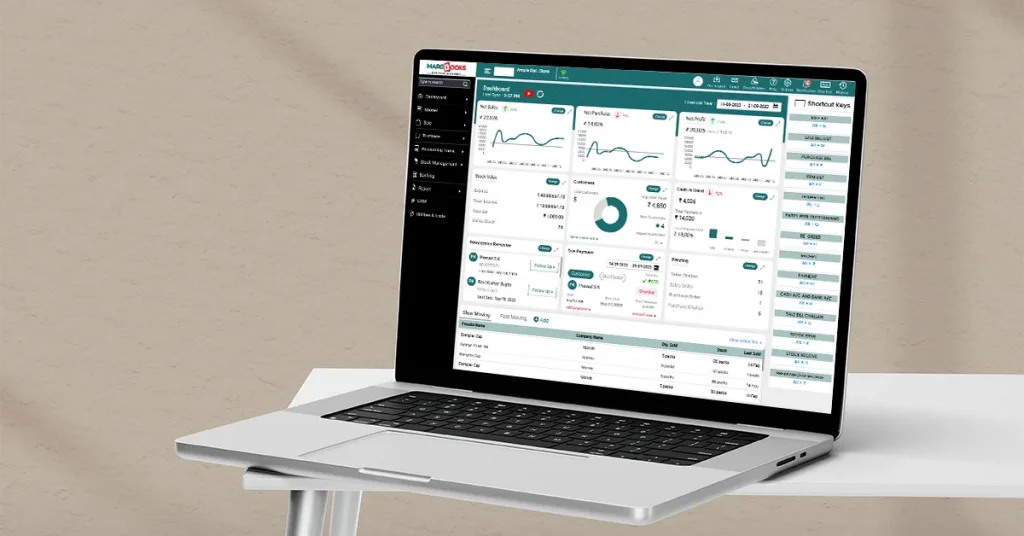
Once that store moved to an integrated billing and inventory system, sales, stock, and GST-relevant data started updating as soon as a bill was generated. That two-day monthly reconciliation grind shrank down to a few hours of review, not because the data got smaller, but because nobody had to rebuild it by hand anymore. This isn’t a one-off story either; it’s the pattern we see again and again in businesses that tackle billing automation first, before touching anything else. There’s a similar case walked through in our piece on how online invoicing helps digitize retail inventory management, if you want to see it from a slightly different angle.
Conclusion
Process improvement was never really about a giant transformation project, no matter how it’s usually pitched. It’s about noticing where your billing, inventory, or GST filing is wasting time or letting errors slip through, and fixing that one thing before moving to the next. Most of the businesses we’ve worked with start with just billing automation and notice the difference inside the first month, sometimes inside the first week.
If you want to see what this actually looks like in your own shop or business, book a free MargBooks demo, and someone on our team will walk you through where the easiest win usually sits for a business like yours.
FAQs
Q.1 What is the main goal of process improvement?
It is reducing wasted time, waste, and mistakes in the workflow while keeping the same or improved quality of the output.
Q.2 What are the essential phases of process improvement?
Begin with identifying and mapping the current performance; move to the bottleneck; start with the most critical problem; then, measure the effects.
Q.3 What tools help with business process improvement?
Usually saas software eliminates the need for making manual entries across different large organizations.
Q.4 Does software alone fix a process problem?
Not entirely. Software removes manual, repetitive work, but the business still needs to review its processes regularly; the tool supports the habit, it doesn’t replace it.
Q.5 Is process improvement applicable exclusively to large companies?
No. In fact, small entities are often the ones who receive initial, rapid benefits because a single improvement can yield immediate results, for example, by introducing automation into the billing system.

Aman Kannojia is the Digital Team Lead at MargBooks. He started out as an SEO Specialist and never lost his love for words. With 5 years of experience across banking, SaaS, and finance, both domestic and international, he brings strategy, leadership, and storytelling together. He doesn’t just manage a team, he builds one that creates.