Retail Software
 Distribution Software
 Retail Chain

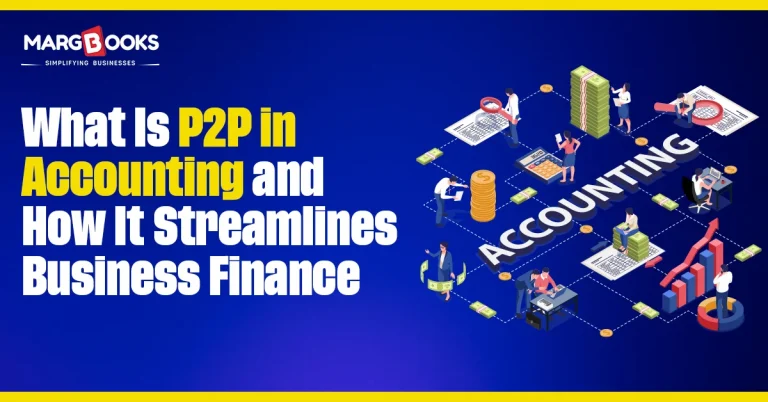
What Is P2P in Accounting and How It Streamlines Business Finance

Duplicate payments, vendors are constantly asking for invoices. Lost audit documents. Does that sound like your business? These issues aren’t signs of a team. There are signs that your current process is no longer working. Spreadsheets were okay when you had a few vendors. Email approvals worked when things were straightforward. When your business grows, the problems that come with your business grow too. At first you might think it is not a deal. You are just having another day at the office. Then you start to notice things like approvals that are delayed, discounts that you are missing out on, relationships with vendors that are getting strained, and audits that are failing. That is when you really start to see the costs of these problems, with your business. You lose time, money, and credibility. That’s where P2P in accounting comes in. It’s not just software or a finance term. It’s an approach to managing how money flows through your business. It helps catch problems before they become costly.
Definition of P2P in Accounting
Procure-to-Pay (P2P in accounting) is just the full journey a purchase takes inside your business. From the moment someone raises a request (“we need more stock / a new tool / a contractor”) to the moment the supplier actually gets paid.It’s the thread connecting your procurement team to your accounts payable function. When that thread holds, money moves cleanly. When it doesn’t, things unravel in ways that are expensive and embarrassing in equal measure. A GST Billing software can help to streamline the P2P process in accounting.
The journey itself is straightforward enough:
- Someone identifies a need and raises a purchase requisition
- It gets approved, and a purchase order goes out to the vendor
- The goods or services arrive and get checked against the order
- The vendor’s invoice gets matched to the PO and the receipt through three-way matching
- Finance reviews and approves
- The vendor gets paid
- Everything gets logged for reporting, compliance, and future audits
Simple on paper. Things can get really messy in practice, especially when you have to deal with departments and multiple approvers, and multiple vendors, all at the same time. The process can be very messy. Multiple departments, multiple vendors, and multiple approvers can make things very messy.
Why does it actually matter?
Because a broken P2P process doesn’t just waste time. It costs real money. Businesses running manual, patched-together workflows regularly deal with duplicate payments that nobody catches, invoices sitting unread in inboxes for weeks, vendors withdrawing good terms because payments are consistently late, and GST compliance gaps that come back to bite them during ITC claims. To better your accounts and billing and prevent any wrong filings, use a Cloud accounting software. Get P2P right, and you flip all of that. Spending gets controlled. Vendors become easier to work with. Books stay clean. Audits stop being dreaded events and become routine ones.
Where cloud accounting actually helps
If your current process is a mix of email threads, Excel files, and a physical folder somewhere, you already know what’s wrong with it. Things fall through the gaps. Approvals take forever. Nobody knows where a payment actually stands without making three phone calls. GST Billing software brings everything into one place, and the difference is real.

You get visibility that didn’t exist before.
Every PO, invoice, and payment record in a single dashboard. Finance can see outstanding payables, vendor balances, and budget usage in real time, without chasing anyone for an update.
Invoice matching stops being a manual job
Three-way matching happens automatically. The company looks for discrepancies. It flags them before they become a problem. This means they do not turn into overpayments or disputes with suppliers. The company finds these discrepancies so they can deal with them. This helps with the suppliers and the overpayments. Discrepancies, like these are a deal. So the company looks for them. Flags them right away.
Approvals actually move
Set up workflows based on value, department, or vendor type. Approvers get notified immediately. What used to take three days takes a few hours.
Vendors can submit invoices directly
Supplier portals cut out the back-and-forth email entirely. Invoices land in the system ready to process.
When an auditor comes knocking
You’re not scrambling to reconstruct a paper trail. Every action is timestamped. A good GST billing software can help you with this, so that instead of panicking, you’re simply clicking the records and be audit ready.
Who should actually be thinking about this?
Most businesses, honestly, but particularly:
- SMEs managing multiple vendors and growing payables
- Retail and distribution businesses handling high purchase volumes
- Manufacturers procuring raw materials at scale
- Service businesses dealing with contractor payments and recurring subscriptions
A simple rule of thumb: if you’re processing more than 20–30 purchase invoices a month on manual systems, you’re almost certainly losing time and money that you don’t need to lose.
Conclusion
P2P isn’t just a finance concern. It affects buying, daily tasks, suppliers, and rules all at the same time. When it works properly, the entire company runs efficiently. Matching a buying-to-paying process with MargBooks software is not about making things more complicated. It’s about getting rid of the manual, mistake parts of your work, and swapping them with something that works steadily without you always having to check on it. If your current method feels like it’s working because of emails, and you hope it probably is.

MargBooks, a product of Marg ERP Ltd., is a revolutionary cloud-based billing & accounting solution for every business where the business owner can manage the business from anytime anywhere on any device. MargBooks is your one-stop platform for managing your accounting, organizing your transactions, controlling your finances and managing your inventory. It’s a single secure platform to keep up with your company’s bills and invoices, reconcile your transaction, file GST return easily, experience connected banking etc.