Retail Software
 Distribution Software
 Retail Chain

GSTR-7 Return: Meaning, Due Date, Format, Penalty & Filing Process Explained


Anyone who has spent time working in the accounts department of a government entity or public sector undertaking knows the basic facts: by the 10th of every month, questions are being asked about GSTR-7. It is hardly the most glamorous of GST returns, and truth be told, most people who are not involved in government contracting have never heard of it. However, if you fall within the category of entities that deduct TDS under GST, you cannot ignore this one as the value of the careless mistake can be great.
Let us take a simple look at GSTR-7: what it is, who needs to file it, the filing date, and the steps to take in case of a missed deadline.
What Is GSTR-7?
GSTR-7 is the monthly return that has to be filed by persons deducting TDS under GST. This is different from the TDS applicable under income tax. This is an entirely different system specific to GST, and this is applicable to very few categories of deductors notified under the law, mainly the government departments, local authorities, and PSUs.
This has its legal backing from section 51 of the CGST Act. What it basically says is: when a notified entity makes a payment to a supplier above a certain value under a contract, a small percentage has to be held back and deposited with the government as TDS. GSTR-7 is the return where you report that.
Sometimes, people confuse this with GSTR-1 or GSTR-3B. Those two deal with your outward supplies and overall tax liability. GSTR-7 doesn’t care about your sales at all; it’s purely a TDS reporting return.
Who’s Actually Supposed to File This
Most regular businesses will never touch GSTR-7 in their life, and that’s fine; it isn’t meant for them. The entities on the hook for it are:
Central and state government departments, local authorities, government agencies, and public sector undertakings, along with anyone else the government specifically notifies under Section 51.
One thing worth remembering: TDS applies only when a single contract’s value crosses ₹2.5 lakh. Below that, there’s nothing to deduct, and nothing to report.

When’s It Due?
The 10th of the next month. Every time. TDS deducted in July needs to be reported by August 10th, and so on.
This due date matters more than people think, because the deductee, the supplier whose payment got the TDS cut, can’t claim credit for that amount in their electronic cash ledger until you’ve filed. Delay the filing, and you’re basically holding up their compliance too, which is how those awkward “why hasn’t my credit shown up yet” calls start.
Just a suggestion: Don’t wait until the 9th or 10th of the month to log on and make your filing. The portal tends to get bogged down at times nearing a deadline, and no one wants to be stuck refreshing their page.
What the Return Looks Like
Once you’ve filed it a few times, it will no longer feel difficult to manage. In general, it covers:
Basic registration details, GSTIN, legal name, and the period you’re filing for. Then deductee-wise TDS details, meaning who you deducted from, how much, and under which head (CGST, SGST, IGST). There’s a section for amendments if something needs correcting from an earlier month, a table showing TDS liability payable versus what’s actually been paid, and finally a section covering any interest, late fee, or refund that applies.
None of these tables are individually complicated. What gets tedious is doing this deductee by deductee, contract by contract, every single month, by hand.
The Penalty Side of Things
This is where people get caught out. Miss the due date, and the late fee is ₹100 per day under CGST plus another ₹100 per day under SGST, so ₹200 a day combined, capped at ₹5,000.
That’s not the only cost though. Interest at 18% per annum also applies on the TDS amount that wasn’t deposited on time, counted from the day right after the due date until it’s actually paid.
And because the deductee’s credit is tied to your filing, a delay on your end doesn’t just cost you money; it creates friction with whoever you’re contracting with. Nobody wants to explain to a vendor why their TDS credit is stuck.
Filing GSTR-7
Log into the portal, go to Services, then Returns, then the Returns Dashboard. Pick the financial year and the month you’re filing for, select GSTR-7, and hit “Prepare Online” (or use the offline tool if you’ve got a lot of entries to upload). Fill in the deductee-wise TDS details, check the auto-calculated liability, preview the whole thing carefully, and file it using DSC or EVC depending on how your entity is set up. Once it’s filed, download both the return and the GSTR-7A certificate for your records.
If you’re only dealing with one or two contracts a month, this whole process takes maybe twenty minutes. If you’re handling dozens of deductees across multiple departments, it stops being a twenty-minute job real fast.
Where a Tool Like MargBooks Actually Saves Time
This is usually around the point where whoever’s handling this every month starts wondering if there’s a faster way, and there is. Repeating the same deductee GSTINs and contract details every month isn’t the kind of job you should be made to do.
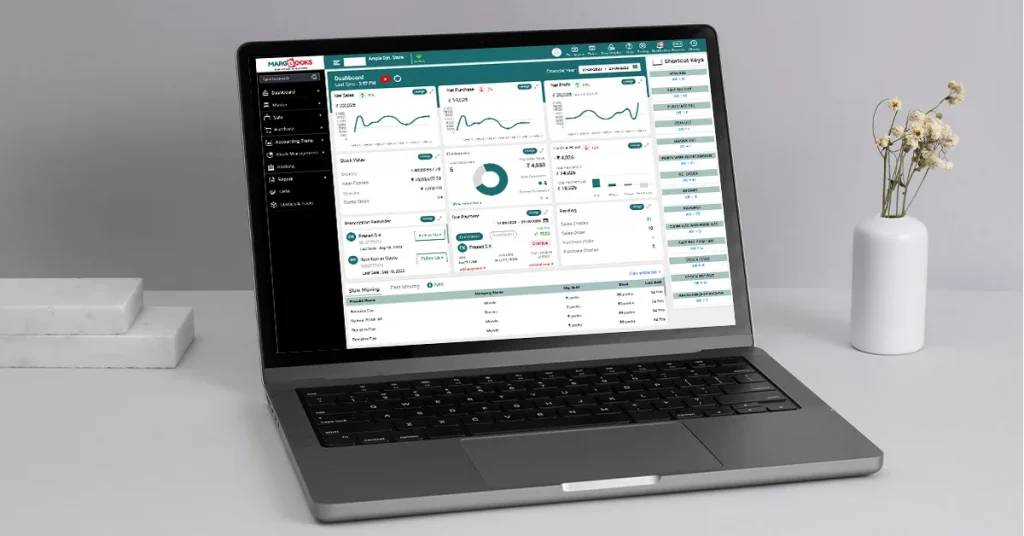
MargBooks extracts the deductee data from your records instead of you re-entering them, calculates the TDS liability on its own, reminds you of the due date in advance so that you do not have to incur any late payment fees, and creates a ready-to-upload JSON file for the website. If GSTR-7 has turned into a monthly chore that eats up more time than it should, GST Billing software is worth a look.
Mistakes People Keep Making
A handful of errors show up over and over in GSTR-7 filings: wrong GSTIN entered for a deductee, TDS amount not matching the contract figure, missing the deadline because it wasn’t tracked anywhere, or not bothering to reconcile entries against the deductee’s GSTR-2A/2B afterward. None of these are hard to fix. They just need someone paying attention, or a system that catches them before submission.
Conclusion
GSTR-7 isn’t a difficult return to understand, but it’s one of those things where a small delay snowballs into late fees, interest, and an irritated vendor chasing their TDS credit. Get the due dates tracked properly and the deductee data organised, and it stops being a headache; it just becomes another routine filing. If keeping track of all of this on your own is becoming too much, consider allowing MargBooks Software to handle all of the math, alerting you, and doing all the paperwork.
FAQs
Should I still file GSTR-7 even if there was nothing deducted as TDS?
Absolutely; you still have to file a zero return if you’re registered as a TDS deductor.
Can I revise GSTR-7 after filing it?
There’s no formal revision process, but you can correct earlier entries through the amendment table in a later month’s return.
What happens to the GSTR-7A certificate if filing is delayed?
It’s generated only after GSTR-7 is filed, so a delay in filing pushes the certificate back too.
Does interest apply on top of the late fee, or instead of it?
Both apply separately; the late fee is for filing late, and interest is for the TDS amount that wasn’t deposited on time.

Aman Kannojia is the Digital Team Lead at MargBooks. He started out as an SEO Specialist and never lost his love for words. With 5 years of experience across banking, SaaS, and finance, both domestic and international, he brings strategy, leadership, and storytelling together. He doesn’t just manage a team, he builds one that creates.