Retail Software
 Distribution Software
 Retail Chain

What are Common Mistakes in Purchase Order Accounting Entry?

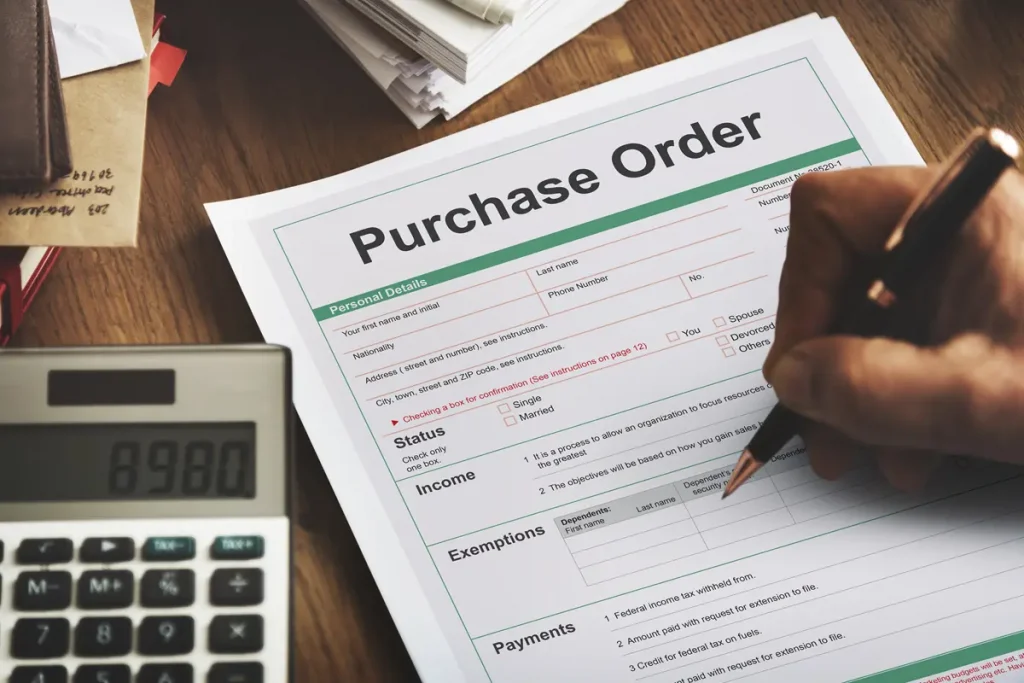
Procurement is a day-to-day business in any Indian business. But Purchase Order Accounting Entry mistakes can silently destroy books of accounts. Traders, manufacturers, retailers as well as MSMEs tend to make a confusion between documentation stages and accounting stages. A purchase order is merely a desire to buy. It is not a financial transaction in and of itself.
Mistakes occur if entries are passed at wrong time or wrong ledger. This impacts inventory, GST return and creditor balances. Understanding common mistakes and mistakes can avoid disputes, tax notices and distorted financial statements.
What is a Purchase Order Accounting Entry?
A Purchase Order Accounting Entry refers to the accounting treatment given to transactions linked with a purchase order. Quantity, rate, and terms are all confirmed in a purchase order. Accounting entry is usually passed in the scenario where:
- Goods are received
- Services are completed
- Supplier invoice is recorded
A purchase order does not on its own, create expense or liability. The Purchase Order accounting entry accounting start only on receiving goods or an invoice from the business.
Purchase Order as Actual Expense Before Goods Receipt
In some cases, businesses make an entry at the time of making the purchase order. This happens due to:
- Manual accounting systems.
- Ambiguity between procurement and accounts teams.
- Incorrect accounting software setup.
What goes wrong?
- Expense gets recorded early.
- Inventory is still understated.
- The creditor’s balance appeared inaccurate.
Correct Approach
Nothing that should enter the PO stage should be passed. Entry must be recorded after the Goods Received Note (GRN) or invoice of the supplier.
Ignoring Goods Received Note
GRN verifies physical receipt of goods. In trading and manufacturing units, the stock may be generated before the invoice in the warehouse.
- Inventory is not updated on a timely basis
- Stock reports are no longer reliable
- Costing errors in manufacturing
Example
A textile dealer in Surat gets ₹5,00,000 worth of fabric. to 3 invoice arrives after 3 days. If entry is delayed, there is a high cost in the form of incorrect stock position and the sales team overselling it. The use of structured tools like MargBooks helps to tie PO, GRN and invoice in a possible controlled sequence.
Incorrect GST Calculation
- Wrong GST rate selection.
- Confusion between intra-state and inter-state purchase.
- Manual tax entry errors
Consequences
- Incorrect ITC claim
- Mismatch in GSTR-2B
- Notice from GST department
Businesses that will be using GST billing software must ensure that they have up-to-date tax masters. Rate selection should be reviewed before posting the purchase invoice.
Wrong Ledger Posting
- Post the purchase to the expense account rather than the inventory.
- Recording the wrong supplier account with credit.
- Utilizing a temporary suspense ledger.
Impact
- Distorted profit figure
- Negative outcomes of vendor reconciliation
- Audit queries
Manufacturers have to debit the purchase account or raw material inventory based upon the system pursued. Service purchases should go to expense ledger. A clear chart of accounts is very important.
Duplicate Entries
- Invoice entered twice
- PO auto-converted, and invoice entered manually again.
- Lack of coordination between branches.
Result
- Inflated expense
- Overstated creditor account
- Confusion during payment
Strong controls in accounting software minimize duplicate entries by allowing the validation of invoice numbers. Our MargBooks software offers duplicate check alerts, and this helps in preventing such issue in case number of the invoice is repeated.
Mismatch Between Purchase Order and Supplier Invoice
Types of mismatches
- Quantity difference
- Rate variation
- GST rate difference
Business Impact
- Payment disputes
- Incorrect valuation
- Profit margin distortion
Procurement team must make a comparative of PO, GRN and invoice before final posting. Even a small difference in rate can make a difference in cost in large volume purchases.
Not Updating Creditor Balance Properly
Common Oversight
- Payment was recorded without linking the invoice.
- Advance not adjusted
- Credit note ignored
Consequences
- Vendor statements do not match
- Payment follow-ups increase
- Audit complications
Retail stores and MSMEs face this issue quite often when advances are paid while buying inventory for the festive periods. There is a need for proper vendor reconciliation every month. Our MargBooks software enables tracking of the supplier balances invoice-wise and curbing such mismatches.
Example Journal Entry
A Mumbai-based electronics trader receives goods worth ₹1,00,000 plus 18% GST from ABC Suppliers.
Correct entry at the invoice stage:
- Purchase Account Dr ₹1,00,000
- Input CGST Dr ₹9,000
- Input SGST Dr ₹9,000
- To ABC Suppliers ₹1,18,000
If the entry was passed at the PO stage liability would be recorded before receiving the actual. That is incorrect.
Consequences of Errors in Purchase Accounting
Mistakes in Purchase Order Accounting Entry can lead to:
- Distorted financial statements
- Incorrect valuation of inventories
- GST compliance risk
- Vendor disputes
- Cash flow planning errors
Manufacturers may report wrong cost of production. Traders tend to display inaccurate gross profit. There could be stock limitations for retailers because of reporting shortcomings. Using a structured workflow inside the MargBooks software ensures that PO creation does not directly happen to accounts until documentation is taken care of.
How Businesses Can Avoid These Mistakes?
- Do not pass entry at PO stage.
- Now only after GRN or invoice record entry.
- Check whether GST rate has to be posted.
- Conceal accounts of vendors on a monthly basis.
- Restrict duplicate invoice numbers.
- Jointly train procurement and account teams.
- Use system-based controls instead of manual entries.
A clear SOP between the purchase and accounts departments is critical.
Conclusion
Errors in purchase order accounting entry are common, but they can be prevented. The cause of this is confusion between procurement documentation and accounting recognition. A purchase order is a statement of intent. It does not cause expense or liability. Only where goods are received or an invoice is recorded, the entries need to be passed. Wrong GST calculation, duplicate posting, wrong ledger selection, and not considering GRN can affect the financial statements and cause compliance problems.
For businesses, disciplined processes and structured systems such as MargBooks software should be followed in order to remain accurate. Careful handling of Purchase Order Accounting Entry helps in ensuring reliable inventory records, proper reporting of GST, as well as smooth vendor relationships.